
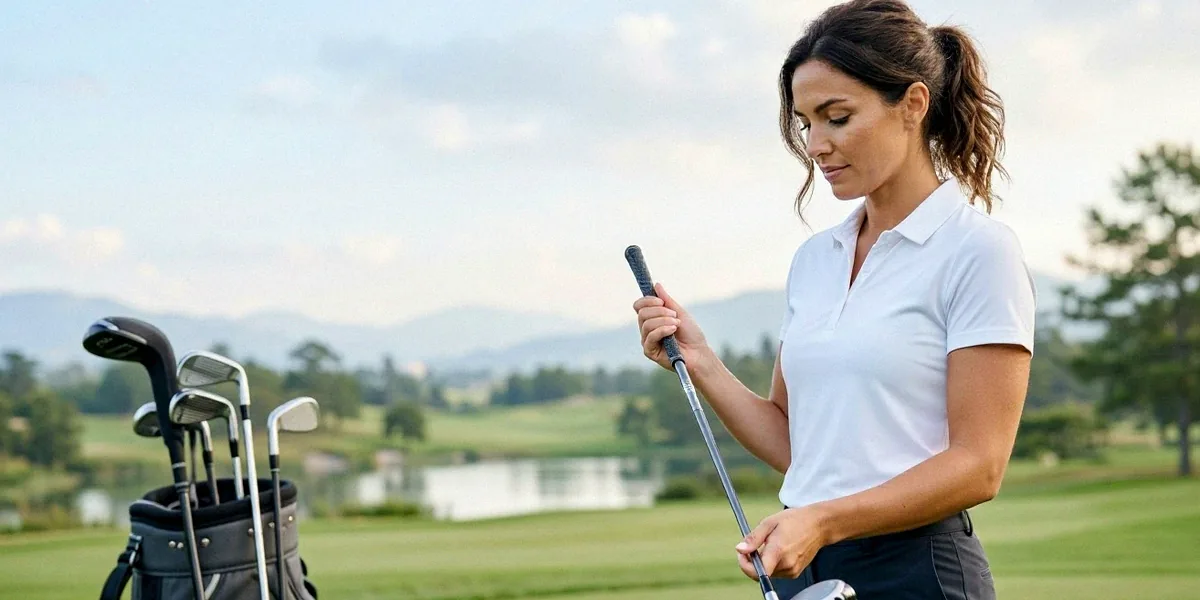
Choosing Golf Clubs for Women: Shafts, Lofts and Fitting
You’ve been playing with a set of clubs handed down from a partner, a parent, or picked up cheaply online. Every shot feels like hard work. The ball scuffs along the ground instead of soaring, your hands sting on cold mornings, and by the fourteenth hole your shoulders ache. You wonder whether it’s your swing — but often it’s the equipment. The right clubs, matched to your swing speed and build, can add distance, improve consistency, and make the game genuinely enjoyable again. Here at mariahernandezgolf.com, we’ve watched countless UK golfers transform their scores simply by understanding shafts, lofts and fitting. This guide explains exactly what to look for.
Why Women’s Golf Clubs Are Different

It’s a common misconception that women’s golf clubs are simply men’s clubs cut shorter and painted pink. They are not. Manufacturers design women’s lines from the ground up with lighter overall weight, more flexible shafts, and higher lofts. The goal is to help golfers with moderate swing speeds launch the ball higher and carry it further — which is precisely what most women need.
Brands such as Callaway, Ping and Cobra all produce dedicated women’s ranges rather than offering a token few clubs. Ping’s G Le3 line, for example, is built specifically around lighter heads and shafts, while Cobra’s Air-X range focuses on reducing swing effort. Callaway’s Reva range is designed specifically for women golfers, with centre of gravity positioned to promote a higher ball flight.
Swing Speed and Shaft Weight
The average female golfer swings a driver somewhere between 55 and 75 mph, compared with 85 to 105 mph for the average male golfer. That difference matters enormously. A shaft that is too heavy or too stiff will rob you of clubhead speed and launch angle, producing low, weak shots that run along the fairway rather than flying through the air. Lighter shafts let you generate more speed with the same effort.
The Myth of ‘Shrinking and Pinkifying’
For years, equipment companies assumed women would accept a shortened men’s club with a softer grip and a pastel colour scheme. That approach ignored biomechanics entirely. Today’s better women’s clubs have distinct head weights, lie angles and shaft profiles. If a club feels heavy, boardy or hard to square at impact, it probably wasn’t designed for you — regardless of what the label says.
Understanding Shaft Flex and Weight
Shaft flex describes how much a shaft bends during the swing. The traditional categories run from L (ladies), A (senior or amateur), R (regular) and S (stiff). Flex affects both ball flight and distance. If your shaft is too stiff, you’ll struggle to square the face and lose height. If it’s too soft, you may hit the ball high and left with inconsistent control.
Graphite shafts dominate women’s golf because they are significantly lighter than steel. A graphite shaft might weigh 50 to 65 grams, while a steel shaft typically weighs 95 to 120 grams. That saving adds up over eighteen holes, particularly in the wind and cold of a UK winter. Most UK fitters will put you on a launch monitor during a fitting session, which measures clubhead speed, ball speed, launch angle and spin. That data removes the guesswork.
Ladies vs Senior Flex: What’s the Difference?
Ladies flex (L) is generally the softest and lightest option available. Senior flex (A) sits between ladies and regular — slightly firmer, slightly heavier. Many women with moderate swing speeds actually fit better into senior flex as they improve, because their tempo and speed increase. There’s no rule that says you must play a ladies flex shaft. The right answer depends on your swing, not your gender.
Graphite vs Steel: Which Is Right for You?
Graphite is the default choice for drivers, fairway woods, hybrids and increasingly irons. It reduces vibration, which matters on frosty mornings when mishits sting your hands. Steel still appeals to some stronger players who prefer the feel and stability of a heavier shaft in their irons. For most women, though, graphite throughout the bag delivers better results with less fatigue.
Lofts: Getting the Ball Airborne
Loft is the angle of the clubface, and it is your greatest ally. Higher lofts help the ball get airborne, which in turn produces more carry distance. Many women play drivers with just 9 or 10 degrees of loft and wonder why they hit low screamers. A driver in the 12 to 14 degree range is often far more effective.
Similarly, many women’s iron sets now begin at the 6-iron or 7-iron and include hybrids in place of long irons. Brands like TaylorMade and Cleveland Golf have embraced this approach, building sets that flow from hybrid to mid-iron to wedge without awkward gaps.
Driver Loft: Why 12 Degrees Might Be Your Friend
If your swing speed sits below 80 mph, a 12 degree driver will almost certainly give you more carry than a 10.5 degree model. The extra loft counteracts the low launch created by slower speeds. In winter golf UK conditions, when cold, dense air reduces ball flight further, that additional loft becomes even more valuable.
Hybrids and Fairway Woods: The Forgotten Heroes
A 5-wood or 7-wood is easier to launch than a 3-iron or 4-iron and far more forgiving on mishits. Hybrids bridge the gap between irons and fairway woods, offering a higher launch and a wider sole that glides through rough. If you carry long irons you rarely hit well, swapping them for hybrids and fairway woods is one of the quickest ways to improve your scoring.
The Importance of Custom Fitting
Off-the-shelf clubs are built to average measurements that may not match your height, arm length or posture. Custom fitting adjusts lie angle, shaft length, shaft flex and grip size to suit you. It is not an expensive luxury reserved for tour professionals — it’s a practical investment that pays off in every round.
In the UK, American Golf is a major UK retailer with fitting centres nationwide, making it easy to book a session close to home. Precision Golf offers more specialist fitting for players wanting detailed data analysis, and many local pro shops run fitting days with brand representatives present. Winter is an excellent time to get fitted: courses are quieter, pro shops have more availability, and you’ll have new clubs dialled in before the season starts.
What to Expect in a Fitting Session
- A warm-up period so the fitter can see your natural swing.
- Baseline measurements using a launch monitor.
- Testing of different shaft weights, flexes and head models.
- Adjustments to lie angle and length based on impact tape and data.
- A final recommendation with a printed summary of your specifications.
Lie Angle and Grip Size: Small Changes, Big Impact
Lie angle is the angle between the shaft and the ground at address. If it’s wrong, the toe or heel of the club digs in at impact, sending shots left or right even when your swing is sound. Grip size matters too: grips that are too thick restrict wrist action, while grips that are too thin encourage a hook. Small adjustments here can produce noticeably straighter shots.
Practical Tips for UK Golfers
You don’t need to spend a fortune to get properly equipped. There are sensible ways to test clubs and buy wisely without compromising on quality.
- Attend demo days at UK clubs, where brands bring their latest ranges for free testing.
- Book a fitting at American Golf or your local pro shop before buying anything.
- Consider previous-season models, which offer nearly identical performance at reduced prices.
- Check reputable second-hand retailers for lightly used women’s sets.
- Prioritise lighter shafts and higher lofts if you play mainly in cold, wet conditions.
Winter golf in the UK often requires higher-launching clubs due to cold, dense air, which reduces both ball speed and carry. A 12 degree driver and a 7-wood become genuinely useful tools between November and March, not luxuries.
Demo Days and Brand Experiences
Most UK clubs host demo days through spring and autumn, and sometimes indoors during winter. These events let you hit multiple brands side by side on a range or simulator. It’s the closest thing to a free fitting and a great way to narrow your shortlist before committing.
Budget-Friendly Options: Second-Hand and Previous Seasons
A two-year-old Ping G Le3 set will outperform a brand-new set that doesn’t fit you. Previous-season models are widely available at significant discounts, and second-hand marketplaces often list barely used women’s clubs. Just make sure you know your specifications from a fitting first, so you buy the right thing.
Our Team’s Top Recommendations
We’ve tested and watched UK players use a wide range of women’s clubs. These are the models our team keeps coming back to for 2025.
Best for Beginners
The Cobra Air-X offers lightweight shafts ideal for slower swing speeds, making it exceptionally easy to launch. The Callaway Reva is designed specifically for women golfers, with a forgiving face and high launch that suits new players building confidence.
Best for Improving Players
The Ping G Le3 is a popular women’s club line in the UK, and for good reason: it balances forgiveness with a compact shape that better players appreciate. TaylorMade’s Kalea range and Cleveland Golf’s Launcher XL Halo irons also deserve attention for their hybrid-style forgiveness and high ball flight.
FAQ
Do I really need women’s specific clubs?
Not necessarily, but you do need clubs that match your swing speed, height and strength. Many women fit perfectly into senior flex or regular flex shafts in standard men’s heads. The label matters less than the specification.
How often should I get fitted?
Every three to five years, or whenever your swing changes significantly through lessons or practice. If you’ve gained speed or changed your posture, your old specifications may no longer suit you.
Is custom fitting expensive?
Many UK retailers, including American Golf, offer free fittings when you purchase clubs. Standalone fitting sessions typically cost between £30 and £100, often refundable against a purchase.
What loft driver should I use in winter?
If you already play 12 degrees, stick with it. If you play 10.5 or lower and struggle for carry in cold weather, testing a 12 or 13.5 degree head is well worth the effort.
Are graphite shafts only for beginners?
No. Plenty of low-handicap women and senior men play graphite throughout the bag. It reduces weight and vibration, and modern graphite shafts offer excellent stability.
Understanding shafts, lofts and fitting is the difference between fighting your equipment and playing freely. Book a session at your local UK pro shop or a fitting centre, test a few options on a launch monitor, and invest in clubs built for your swing. Your scores — and your enjoyment — will thank you for it.